Yuangang Li
PhD Student at UCI
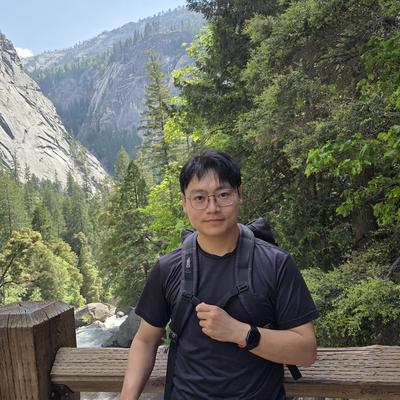
Hi 👋! I am Yuangang Li, a PhD student at the Donald Bren School of Information and Computer Sciences, University of California, Irvine, where I am fortunate to be advised by Prof. Cristina (Crista) Lopes.
Before my PhD study at UCI, I spent wonderful years at the University of Southern California, completing my Master’s degree and working with Prof. Yue Zhao. During that time, I also had the pleasure of collaborating with Prof. Xiyang Hu and Prof. Jiechao Gao.
My research interests are centered around trustworthy AI, AI agents evaluation and optimization, and AI auditing (programming-language verification for AI).
Research Interests
Trustworthy AI & LLM Safety
AAAI ×2 · ACL Findings ×2 · EMNLP Findings, etc.
More detailsHide detailsAgent Evaluation & Optimization
EMNLP · NeurIPS E&D ×2, etc.
More detailsHide detailsPrivacy-Preserving & Decentralized Learning
Nature AI · ACM MM · IEEE BIBM · ICDM Workshop
More detailsHide detailsTrustworthy AI & LLM Safety
A language model can reach the right answer for the wrong reason, and accuracy alone cannot tell the two apart. My work tries to make that difference visible and to shrink it. One part is reasoning itself: fine-tuning on explicit causal structure reduces hallucination, and STRAT builds the separation between data and the rules that act on it into the architecture, so logical rules can be learned from ten base examples per dataset. Another part is detection: benchmarks for anomalous text, and an evaluation of how well LLMs serve as detectors. The same concern runs through interpretable classifiers whose decisions can be read clause by clause, radiology reports anchored to the anatomy, and simulations of human decision-making grounded in real population data.
All papers in this line of work; the full list is on the Publications page.
Agent Evaluation & Optimization
Agents are usually scored by whether the final output passes a test, which says little about how they got there or how they compare across tasks. I work on evaluation that looks closer. For coding, CodeRQ-Bench and the VERA evaluator score the reasoning behind a solution rather than only its result. Across the field, Harbor Adapters brings more than 80 agentic benchmarks behind one interface, and Harbor-Index distills them into 82 hard tasks on which no tested model–harness pair clears 30%; Agents’ Last Exam adds over 1,000 long-horizon tasks written by practitioners. On the optimization side, I study where capacity should go inside agent pipelines — which stage of a generate–critique–revise loop actually needs a large model — and why automation stalls in operationally complex industries.
All papers in this line of work; the full list is on the Publications page.
Privacy-Preserving & Decentralized Learning
When data cannot leave the hospital or the device that produced it, the model has to be trained where the data lives, and every round of communication costs bandwidth and energy. My work here makes federated training cheaper without giving up accuracy. H-FedSN trains personalized sparse networks across a client–edge–cloud hierarchy and cuts communication by up to 238×; FedBCGD, aimed at large models, has each client upload a single block of parameters per round. The same constraints show up in applications: personalized medication across distributed healthcare systems, and spatio-temporal graph learning where raw data is never pooled.
All papers in this line of work; the full list is on the Publications page.
Chat with me
A few questions I get often, answered ahead of time. For anything else, just email me.
News
- [Sep 2026] We have a new preprint: MetaPersona. LLM social simulations seed their agents with personas, but there has been no principled way to decide which attributes those personas need. MetaPersona grounds them in MetaPersona-DB, 11,000+ empirical human-subjects studies, building persona dependency graphs from the literature and sampling populations from empirical priors, at under $0.5 per task. [arXiv]
- [Sep 2026] New preprint: The Geometry of Logic. We introduce STRAT, an architecture that separates data from control to improve logical reasoning, reaching 38.5% higher mean accuracy than a Transformer across 11 datasets from only 10 base training examples each. [arXiv] [Project]
- [Sep 2026] We have two papers accepted to the NeurIPS 2026 Evaluations and Datasets Track: Agents' Last Exam, a community benchmark of 1,000+ long-horizon agent tasks, and Harbor Adapters and Harbor-Index, one evaluation interface across 80+ agentic benchmarks. [arXiv] [arXiv]
- [Sep 2026] We have released the Harbor Adapters paper. It ports 80+ agentic benchmarks behind one evaluation interface, then uses that to run 8 models across 54 benchmarks — a broader read on agent capability and failure modes than was previously possible. Harbor-Index, the 82-task distillation I contributed to, falls out of the same pipeline. Nothing tested clears 30%; the strongest configuration, GPT-5.5 with Codex, reaches 28.0%. [arXiv] [GitHub] [Hugging Face]
- [Aug 2026] H-FedSN has been accepted to Nature AI’26. It cuts communication cost in hierarchical federated learning by up to 238× through structured masking and Bayesian aggregation, without trading away accuracy. [arXiv]
- [Aug 2026]
 My first-author paper Beyond Output Correctness has been accepted to the Main Conference of EMNLP 2026 (15.4% acceptance rate)! The paper argues that grading only the final answer misses how a model got there, and introduces CodeRQ-Bench and the two-stage evaluator VERA to score the reasoning itself. See you in Budapest. [arXiv] [GitHub]
 - [Aug 2026] We have a new preprint: Asymmetric Capacity Allocation in Self-Refinement Pipelines. Generate–critique–revise pipelines usually give every stage the same model. Sweeping 6 sizes of Qwen3 and 4 of Gemma 3 across 5 benchmarks shows they should not: an undersized refiner actively hurts, while the critic barely needs capacity at all — though having even a small one still beats skipping critique. [arXiv]
- [Jul 2026] Harbor-Index 1.0 is out, a compact, high-signal benchmark for frontier agents: 82 tasks distilled from 6,627 candidates across 54 benchmarks integrated as Harbor adapters, spanning software engineering, research, tool use, mathematics, data analytics, and security. No agent-model pair tested clears 30%. I served as a Core Contributor on the index. [Site] [Contributors]
- [Jun 2026] We have a new community benchmark: Agents' Last Exam, 1,000+ economically valuable, long-horizon agent tasks contributed by 300+ practitioners. Frontier agents average 2.6% full pass on the hardest tier. I contributed tasks as one of the authors. [arXiv] [Project]
- [Jun 2026] We have two new preprints: Clusters are All You Need pre-trains the Tsetlin Machine with semantic clusters drawn from language models, keeping clause-level interpretability while lifting accuracy; The Orchestration Gap examines why process automation stalls in operationally complex industries. [arXiv] [arXiv]
- [Jun 2026] I started as a Machine Learning Research Intern at Kilby Labs, Texas Instruments, on the Generative AI team, working on coding agents and agentic AI systems for complex task automation.
- [Apr 2026] Our paper LLM-Guided Semantic Bootstrapping for Interpretable Text Classification with Tsetlin Machines has been accepted to Findings of ACL 2026! It distills LLM knowledge into interpretable Tsetlin Machines, reaching BERT-level accuracy without embeddings or inference while preserving clause-level transparency. [arXiv] [ACL Anthology]
- [Apr 2026] New first-author preprint: Beyond Output Correctness. We introduce CodeRQ-Bench, the first benchmark for reasoning quality across code generation, summarization, and classification, analyze 1,069 mismatch cases from existing evaluators, and propose VERA, a two-stage evaluator combining evidence-grounded verification with ambiguity-aware score correction, improving AUCROC by up to 0.26 and AUPRC by up to 0.21. [arXiv] [GitHub]
- [Jan 2026] I headed to AAAI 2026 in Singapore to present Mitigating Hallucinations in Large Language Models via Causal Reasoning, with S2D-Align also appearing at the conference. Both are now published in the Proceedings of AAAI, Vol. 40. [AAAI] [AAAI]
- [Dec 2025] I joined the Stanford team behind Terminal-Bench and Harbor as a Research Collaborator, contributing tasks and datasets to Terminal-Bench 3 and adapters to Harbor, the framework for running agent evaluations and building RL environments. [Terminal-Bench] [Harbor]
- [Nov 2025] We have two papers accepted to AAAI 2026! CDCR-SFT internalizes causal DAG-based reasoning during fine-tuning, lifting causal reasoning on CLADDER from 72.9% to 95.3% and cutting hallucinations by 11% on HaluEval; S2D-Align grounds radiology report generation through shallow-to-deep auxiliary alignment. [arXiv] [GitHub] [arXiv]
- [Sep 2025] I started my PhD at the UC Irvine Donald Bren School of ICS, advised by Prof. Crista Lopes, working on trustworthy LLMs, coding agents, and LLM transparency for code generation.
- [Aug 2025] Our paper NLP-ADBench has been accepted to Findings of EMNLP 2025! It is the first comprehensive NLP anomaly-detection benchmark, covering 8 datasets and 19 methods, and shows that LLM-based features are consistently strong across the board. [arXiv] [ACL Anthology] [GitHub]
- [Aug 2025] I wrapped up my Research Assistant positions at Stanford University and USC. Many thanks to all my advisors for their mentorship and support.
- [May 2025] Our paper AD-LLM: Benchmarking Large Language Models for Anomaly Detection has been accepted to Findings of ACL 2025! It evaluates LLMs for zero-shot detection, data augmentation, and model selection, positioning them as a robust backbone for NLP anomaly detection. [arXiv] [ACL Anthology]
- [Apr 2025] I started as a Research Assistant at Stanford University, fine-tuning open-source LLMs on the first self-constructed dataset with explicit causal structures and developing LLM-guided semantic bootstrapping for interpretable models.
- [Dec 2024] We have a new preprint on LLMs for political decision-making: a multi-step reasoning framework that simulates voter decisions, cutting election-prediction error by 77% while exposing bias and overfitting in models like GPT-4o and LLaMA 3.1. [arXiv]
- [Nov 2024] We have two federated-learning papers accepted: FedMetaMed at IEEE BIBM 2024, combining federated and meta-learning for personalized medication across distributed healthcare systems, and Fed-LDR at the IEEE ICDM SSTDM Workshop, using GCNs for spatio-temporal analysis with node-centric refinement. I gave talks on both. [arXiv] [arXiv]
- [Sep 2024] I began a research collaboration with the University of Virginia on AutoML and LLM inference, working with Dr. Zhaoyuan Su and Prof. Yue Cheng on automated compression strategies for user-specific tasks.
- [Aug 2024] Co-first-authored review out on Preprints.org: Artificial Intelligence-Aided Digital Twin Design, a systematic survey of how machine learning enhances digital twins across domains. [Preprints]
- [Jul 2024] Our paper FedBCGD has been accepted to ACM Multimedia 2024! It is the first parameter-block communication method for federated training of large models, letting each client upload a single parameter block per round. [ACM DL] [arXiv]
- [Jun 2024] New preprint: H-FedSN, a personalized sparse-network method for hierarchical federated learning in IoT that reduces communication cost by up to 238x through structured masking and Bayesian aggregation while preserving accuracy. [arXiv]
- [Dec 2023] I joined the University of Virginia as a Research Assistant with Dr. Jiechao Gao and Prof. Brad Campbell, working on hierarchical federated learning for IoT and healthcare.
- [Jul 2023] I joined the USC FORTIS Lab as a Research Assistant, advised by Prof. Yue Zhao, working on trustworthy LLMs and NLP anomaly detection.
- [Mar 2023] We released Ablator, an open-source deep-learning framework for horizontally scaling ablation experiments with Ray and Optuna, used by 30+ researchers at USC. I also published python-rclone on PyPI, which ships the RClone binary so no pre-installation is needed. [GitHub] [PyPI]
- [Feb 2023] I joined USC as a Research Engineer with Dr. Iordanis Fostiropoulos, working on distributed AutoML execution and CI infrastructure.
- [Jan 2023] I joined USC Games as a Game Analyst and Developer on "Hexagon Adventure," building Unity/Firebase telemetry and analyzing player behavior, which drove a 40% increase in engagement.
- [Dec 2021] I joined SenseTime as an Infrastructure Engineer, building "RocketMQ as a Service" on Kubernetes with an Operator and CRDs that made service creation 50% faster.
- [Jan 2022] I started my M.S. in Computer Science at the University of Southern California.
- [Apr 2021] I joined the Institute of Software, Chinese Academy of Sciences as a Research Engineer with Prof. Guoquan Wu, building a record-and-playback web test automation platform that improved end-to-end testing efficiency by 300%.
- [Jan 2021] I joined NiuTrans as a Back End Developer, building the PDF/XML/EML parsing and translation modules of an AI document translation system that reached 30,000 MAUs.
- [May 2018] I led development of a recruitment data-mining system at Beijing City University, scraping 10M+ records and building automated dashboards. The project earned National Level Innovative Excellence Project recognition and was adopted by the school.